


TPO vs. PVC vs. Modified Bitumen Roofing
Comparing Commercial Flat Roof Systems in South Florida
Page Summary
- The three most common commercial flat-roof systems in South Florida — TPO, PVC, and modified bitumen — each excel in different situations, and choosing the right one depends on your building, budget, and rooftop conditions.
- TPO is the balanced, energy-efficient favorite for most commercial and condominium roofs; PVC is the premium choice for restaurants and chemical-exposed roofs; modified bitumen is the proven, rugged multi-ply option for high-traffic and re-roof projects.
- A-1 Roofing Contractors installs all three systems across Miami-Dade, Broward, and Palm Beach counties and will recommend the one that fits your property — not a one-size-fits-all product.

Choosing the Right Commercial Flat Roof in South Florida
Most commercial buildings in South Florida have flat or low-slope roofs, and the single-ply and multi-ply membrane systems that cover them are not interchangeable. TPO, PVC, and modified bitumen are the three you’ll most often be choosing between, and each was engineered for a different set of priorities. Picking the right one is about matching the system to your building’s use, your rooftop equipment and exposure, your budget, and how long you plan to own the property.
This guide breaks down how the three compare in the conditions that matter most in Miami — heat, sun, rain, hurricanes, and rooftop wear. A-1 Roofing Contractors installs and services all three, so the goal here is simply to help you understand the trade-offs before you talk to a contractor. For a broader overview, see our commercial flat roofing services in Miami and our guide to what makes the best material for a flat roof. If you already know you want a single-ply system, jump straight to our TPO roofing in Miami page.
At a Glance: TPO vs. PVC vs. Modified Bitumen
Factor | TPO | PVC | Modified Bitumen |
Type | Single-ply membrane | Single-ply membrane | Multi-ply asphalt-based |
Typical lifespan | 20–25 years | 20–30 years | 15–20 years |
Seams | Heat-welded | Heat-welded | Torch-, cold-, or self-adhered |
Reflectivity | High (white “cool roof”) | High (white “cool roof”) | Low unless coated |
Best for | Most commercial & condo roofs | Restaurants, kitchens, chemical exposure | High-traffic roofs, re-roofs, tough terrain |
Relative cost | $ (value) | $$ (premium) | $ (economical) |
Unfamiliar with a term below? Our commercial roofing glossary explains the technical language in plain English.
The Three Leading Flat-Roof Systems
TPO (Thermoplastic Polyolefin)
Best for: the majority of commercial and condominium roofs where energy savings and value matter most.
TPO is a single-ply membrane installed in wide sheets and joined with hot-air-welded seams that fuse the roof into one continuous, watertight surface. It has become the most popular commercial flat-roof system in South Florida, and for good reason: its bright white, reflective surface is a true cool roof that bounces solar heat away from the building, reducing rooftop temperatures and air-conditioning costs in Miami’s year-round sun.
TPO also delivers much of PVC’s performance at a lower installed cost — typically around $7–$13 per square foot depending on membrane thickness, insulation, and roof complexity. With quality installation and routine maintenance, a TPO roof lasts about 20–25 years. When installed with induction-welded attachment (such as the RhinoBond system we offer), TPO achieves excellent wind-uplift resistance for the High-Velocity Hurricane Zone without membrane-penetrating fasteners. Learn more on our dedicated TPO roofing in Miami page.
Strengths: Reflective cool-roof energy savings, strong value, welded watertight seams, good wind performance when properly attached. Trade-offs: Not as chemical- or grease-resistant as PVC — less ideal for restaurant or heavy-industrial roofs.
PVC (Polyvinyl Chloride)
Best for: restaurants, commercial kitchens, and roofs exposed to grease, chemicals, or fire risk.
PVC is also a heat-welded single-ply membrane, and like TPO it offers a reflective cool-roof surface. What sets PVC apart is its superior resistance to grease, oils, chemicals, and fire — which makes it the go-to choice for restaurants, commercial kitchens, and industrial facilities where rooftop exhaust puts grease and chemicals in constant contact with the membrane. PVC is also highly flexible and among the longest-lasting single-ply options, often reaching 20–30 years. Many restaurant and retail owners specify PVC as part of a new commercial roof installation in Miami.
The trade-off is cost: PVC generally carries a higher installed price than TPO. For a building without heavy chemical exposure, that premium may not be necessary — but for a restaurant row or a facility with rooftop kitchen exhaust, PVC’s chemical resistance pays for itself in longevity.
Strengths: Excellent grease/chemical/fire resistance, long lifespan, reflective cool roof, welded seams. Trade-offs: Higher cost than TPO — often more than a non-chemical-exposed roof needs.
Modified Bitumen (Mod Bit)
Best for: high-traffic roofs, re-roofing over existing systems, and buildings that need rugged, multi-layer protection.
Modified bitumen updates traditional built-up “tar and gravel” roofing with modern polymers, creating a tough, multi-ply asphalt-based membrane. It’s applied in layers — torch-applied, cold-applied, or self-adhered — that build up into a thick, redundant, highly puncture-resistant surface. That durability makes mod bit a strong choice for roofs that see regular foot traffic or service work, and for re-roofing scenarios where a rugged, forgiving system is an advantage.
Mod bit typically lasts around 15–20 years. Its main limitation in South Florida is reflectivity: standard mod bit is dark and absorbs heat, so it doesn’t deliver the cool-roof energy savings of TPO or PVC unless it’s finished with a reflective coating. Torch-applied installation also involves open flame, which requires an experienced, safety-focused crew. Learn more on our modified bitumen roofing page.
Strengths: Rugged multi-ply puncture resistance, great for foot traffic and re-roofs, proven track record. Trade-offs: Shorter lifespan than single-ply, low reflectivity unless coated, torch application requires careful handling.
Beyond Single-Ply and Mod Bit
TPO, PVC, and modified bitumen aren’t your only options. For buildings where longevity or appearance is the priority, A-1 Roofing Contractors also installs concrete tile roofing and metal roofing systems. And no matter which membrane you choose, proper drainage is critical in South Florida — see why flat-roof ponding happens and how to fix it, and consider adding roof waterproofing to extend the life of any system.
How to Decide
3-Point Summary: – Start with how the roof is used and what it’s exposed to — that narrows the choice fast. – Weigh energy savings and lifespan against upfront cost over your ownership horizon. – Get a professional assessment; the right membrane depends on your specific building.
For most Miami commercial and condominium buildings, TPO is the balanced default — reflective, durable, and cost-effective. If your roof deals with grease, chemicals, or fire risk (think restaurants and kitchens), PVC is worth the premium. If your roof takes heavy foot traffic, or you’re re-roofing and want a rugged, forgiving multi-ply system, modified bitumen earns its place.
But the “right” answer always depends on the specifics: roof size and slope, rooftop equipment, drainage, exposure, how long you’ll own the building, and your budget. That’s where a professional assessment matters. As the best commercial roofer in Miami, A-1 Roofing Contractors will inspect your roof and give you a straight recommendation based on your building — not a single product we push on everyone. See more about the benefits of working with A-1.
Why A-1 Roofing Contractors
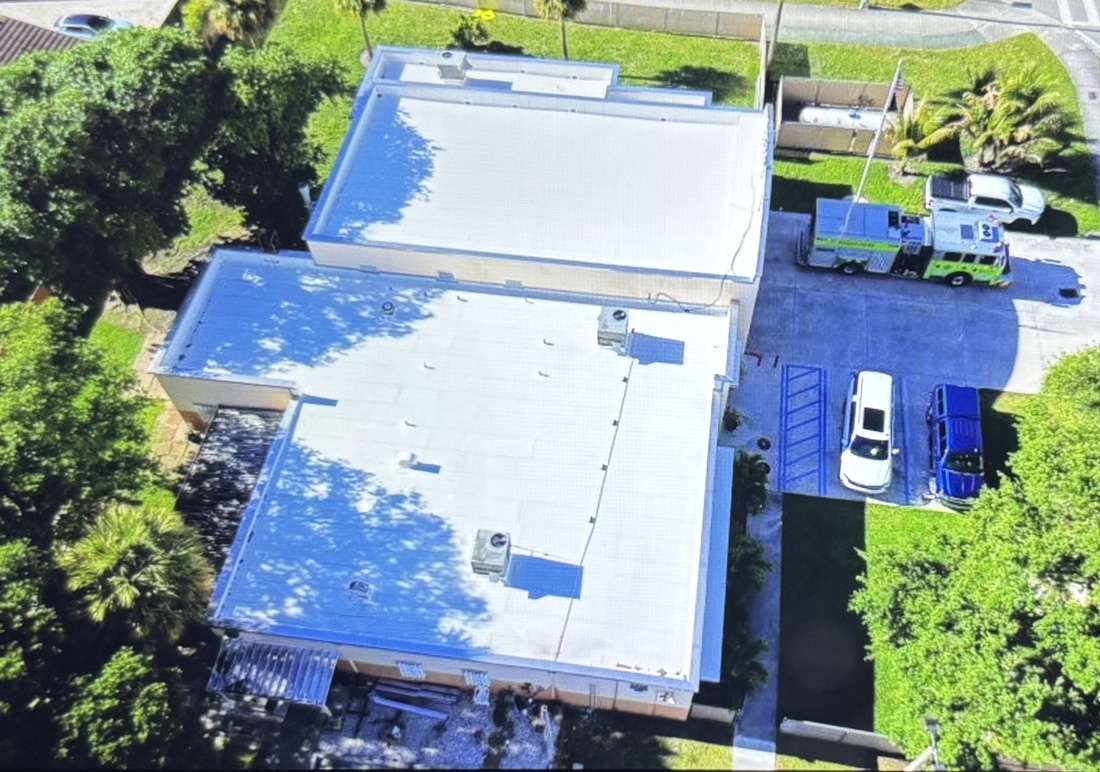
A-1 Roofing Contractors — formerly A-1 Property Services — focuses exclusively on commercial, condominium, and new-construction roofing across Miami-Dade, Broward, and Palm Beach counties, including communities such as Homestead and Miami Gardens. As a GAF-certified contractor serving South Florida since 2006, we install and service all three of these systems to the Florida Building Code and, in the HVHZ, to Miami-Dade County Notice of Acceptance (NOA) standards. Because we’re not tied to a single product, our recommendation is based on what actually fits your building.
Frequently Asked Questions
What is the most popular commercial flat roof in South Florida?
TPO is the most widely installed commercial flat-roof membrane in Miami and South Florida, valued for its reflective cool-roof energy savings, welded watertight seams, and strong value. PVC and modified bitumen remain the better choice for specific situations such as chemical exposure or high-traffic roofs. Our post on the best material for a flat roof goes deeper.
Which lasts longer — TPO, PVC, or modified bitumen?
PVC typically has the longest single-ply lifespan (about 20–30 years), followed by TPO (about 20–25 years). Modified bitumen generally lasts about 15–20 years but offers rugged multi-ply puncture resistance. Installation quality and maintenance strongly affect all three.
Is PVC or TPO better for a restaurant roof?
PVC is usually the better choice for restaurants and commercial kitchens because it resists the grease, oils, and chemicals that rooftop exhaust deposits on the membrane. TPO is excellent for most other commercial and condominium roofs where chemical exposure isn’t a concern.
Which flat roof is best for energy savings in Miami?
TPO and PVC both have reflective white cool roof surfaces that reduce rooftop heat and cooling costs — a major advantage in Miami’s climate. Standard modified bitumen is dark and absorbs heat unless it’s finished with a reflective coating.
Can I re-roof over my existing flat roof?
In some cases, yes — modified bitumen in particular is often used in re-roofing scenarios. Whether a re-roof is appropriate depends on the condition of the existing system and the roof deck. We inspect first and recommend the most cost-effective, code-compliant approach as part of our commercial roof installation services.
Get a Free Commercial Flat Roof Assessment
Not sure which system fits your building? A-1 Roofing Contractors will assess your roof and give you a clear, honest recommendation among TPO, PVC, and modified bitumen — with a competitive, itemized proposal. Explore all of our commercial roofing services or contact us to get started.
A-1 Roofing Contractors (formerly A-1 Property Services) Serving South Florida Since 2006 | GAF Certified Miami-Dade · Broward · Palm Beach Counties
Call us today or request your free commercial flat roof assessment.