


Florida Building Code Wind Uplift Requirements for Commercial Roofs
What are the Florida Building Code Wind Uplift Requirements for Commercial Roofs in Miami-Dade?
- Miami-Dade County sits inside the High-Velocity Hurricane Zone (HVHZ), the most demanding roofing jurisdiction in the United States, with commercial roofs engineered for ultimate design wind speeds of 170+ mph.
- Every roofing product and assembly installed in Miami-Dade must carry a Miami-Dade Notice of Acceptance (NOA) proving it passed rigorous wind uplift, impact, and quality-control testing.
- Wind uplift pressures are not uniform across a roof: corners (Zone 3) take the highest suction forces, perimeters (Zone 2) take elevated pressures, and the field (Zone 1) takes the lowest, so fastening patterns tighten at edges and corners.
- Testing protocols such as TAS 105 (fastener withdrawal) and TAS 114 (uplift resistance) verify that roof assemblies can withstand hurricane-force suction before they are ever approved for installation.
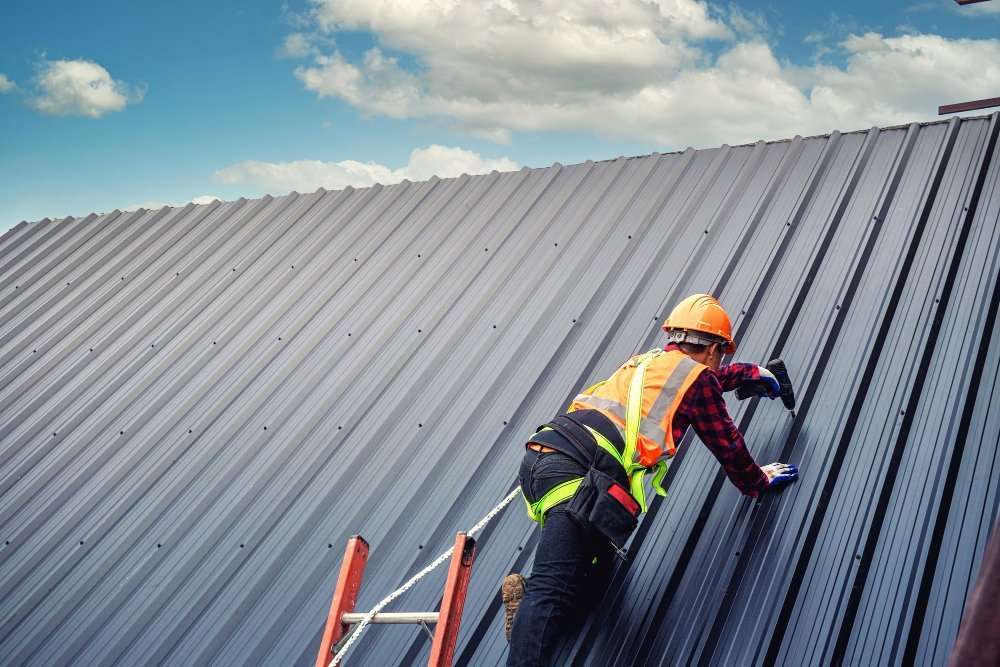
- Fastener spacing, edge metal, flashing, and membrane attachment must follow the exact parameters in the product’s NOA, and installations are verified through mandatory permits and inspections.
- Working with experienced commercial roofing companies in Miami is the surest way to guarantee your roof meets, and passes, HVHZ code requirements.
Why Miami-Dade Has the Toughest Roofing Code in the Country
After Hurricane Andrew devastated South Florida in 1992, investigators found that a huge share of the destruction started at the roof. When wind uplift peels a roof system away, the building envelope fails and everything inside is exposed. In response, Miami-Dade County pioneered the High-Velocity Hurricane Zone (HVHZ) provisions that are now embedded in the Florida Building Code. Today, Miami-Dade and Broward Counties enforce these provisions, and any commercial roof installed here must be designed, tested, and inspected to a standard no other region in the country matches.
For commercial property owners, that means a roofing project in Miami is not just a construction job. It is a code-compliance exercise where the design pressures, the products, the fasteners, and even the installation crew’s workmanship are all regulated. Reputable providers of Miami roofing services build every proposal around these requirements from day one.

What is Wind Uplift, and Why Does It Matter?
Wind uplift is the suction force created when wind flows over and around a building. As air accelerates across the roof edge, pressure above the roof drops while pressure inside the building pushes upward. The result is a powerful lifting force that tries to peel the roof covering, insulation, and even the deck away from the structure. During a major hurricane, uplift pressures at a roof corner can exceed 50 pounds per square foot, more than enough to tear off a poorly attached roof system.
The Florida Building Code addresses uplift by requiring every commercial roof assembly in the HVHZ to resist pressures calculated from ultimate design wind speeds that exceed 170 mph in Miami-Dade County. Those calculated pressures then dictate which roof systems may be used and exactly how they must be attached.
The Three Roof Zones: Field, Perimeter, and Corner
Wind does not load a roof evenly, so the code divides every roof into zones with different design pressures. Zone 1, the field or interior of the roof, experiences the lowest uplift, though it is still significant. Zone 2 covers the perimeter, where airflow separating at the roof edge creates substantially higher suction. Zone 3, the corners, sees the highest pressures of all because wind accelerates around those points from two directions at once. Under the current ASCE 7 wind standard referenced by the Florida Building Code, corner zones are even mapped as L-shaped areas to better capture how those forces behave.
Practically, this means fastener density increases as you move from the field to the perimeter to the corners. An insufficient fastening pattern at the corners is one of the most common reasons a commercial roof fails inspection, and one of the most common reasons roofs fail in real storms.

Miami-Dade Notices of Acceptance (NOAs): The Product Gatekeeper
In the HVHZ, you cannot simply choose any commercial roofing membrane or fastener on the market. Every product and complete roof assembly must carry a Miami-Dade Notice of Acceptance (NOA), which is granted only after the system passes testing protocols that exceed standard ASTM requirements. NOAs also require ongoing quality assurance and annual product surveillance, so approval is never a one-time event.
The NOA is more than an approval document; it is an instruction manual. It specifies the exact deck types, insulation attachment, fastener type and spacing, membrane securement, and edge metal details under which the system achieved its rated uplift performance. Deviating from the NOA during installation, even slightly, voids compliance. This is why commercial roof installation services in Miami-Dade must be performed by contractors who know how to read, follow, and document NOA requirements on every job.
TAS Testing: How Roof Systems Prove Their Strength
The Florida Building Code’s HVHZ provisions rely on Testing Application Standards (TAS) to verify wind uplift performance. TAS 105 is a field fastener withdrawal test that measures the force required to pull a fastener out of the substrate; it is required, for example, when re-roofing over an existing steel deck thinner than 22 gauge, to confirm the deck can still hold fasteners at code-required loads. TAS 114 covers uplift resistance testing of roof assemblies, simulating the suction forces of a design-level hurricane.
These tests matter to building owners because they turn code language into measurable performance. When your roofing contractor proposes a system, its tested uplift rating must meet or exceed the calculated design pressures for every zone of your specific roof, at your building’s specific height and exposure.
Permits, Inspections, and Documentation
Every commercial roofing project in Miami-Dade requires a permit, and the process is rigorous. Uplift calculations signed and sealed where required, product NOAs, and fastening patterns are all reviewed before work begins. During and after installation, county or municipal inspectors verify that what was approved on paper is what actually went on the roof, checking fastener spacing, edge metal securement, and flashing details against the NOA.
For existing buildings, condition assessments are just as important. Professional roof inspection services in Miami can identify loose fasteners, deteriorated edge metal, membrane shrinkage, and saturated insulation, all of which quietly reduce a roof’s real-world uplift resistance long before a storm arrives. Regular assessments from a qualified Miami FL roof maintenance company help ensure the roof you permitted years ago still performs like the roof the code intended.
What This Means for Replacement and New Construction
If your existing commercial roof is aging or was installed before current standards, a flat roof replacement is often the smartest path to full HVHZ compliance, since partial repairs cannot upgrade an obsolete assembly to modern uplift ratings. In many cases, code rules governing the extent of roof work will trigger a full roof replacement rather than piecemeal patching, particularly when more than a quarter of the roof area is involved. For new construction, wind uplift design starts at the drawing stage, with the roof system, deck, and structure engineered together to meet zone-by-zone pressures.
And because South Florida’s hurricane season is a fact of life, every commercial property should have a plan for storm damage. Access to emergency roofing services in South Florida, including temporary protection, rapid assessments, and code-compliant permanent repairs, can be the difference between a quick recovery and months of business interruption.
Partner with A-1 Roofing Contractor for Code-Compliant Commercial Roofing
Meeting Miami-Dade’s wind uplift requirements takes more than good intentions; it takes a contractor who works with NOAs, TAS standards, and HVHZ inspections every single day. A-1 Roofing Contractor is one of the most trusted commercial roofing companies in Miami, delivering code-compliant Miami roofing services for businesses, condominiums, and new construction homes with general contractors throughout South Florida, including Miami-Dade, Broward, and Palm Beach Counties. From commercial roof installation services and flat roof replacement, other types of commercial roof replacement, roof inspection services in Miami, and emergency roofing services in South Florida, our team handles every detail of compliance so you don’t have to. As a full-service Miami FL roof maintenance company, we also keep your roof storm-ready year after year. Call A-1 Roofing Contractor today for a consultation at 786-952-5012, or simply request an estimate online, and put South Florida’s building code experts on your side.